Our Structured Approach to
AI-Driven Quality Inspection Development
Webotix follows a structured, phase-based approach to building AI-powered
quality inspection
platforms like Swift Check. Each phase focuses on solving real inspection challenges in food
manufacturing, ensuring system reliability, scalability, and seamless adoption across
suppliers, quality teams, and procurement workflows.
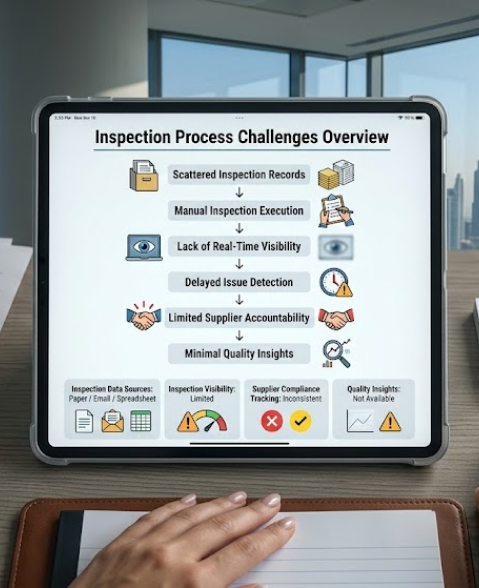
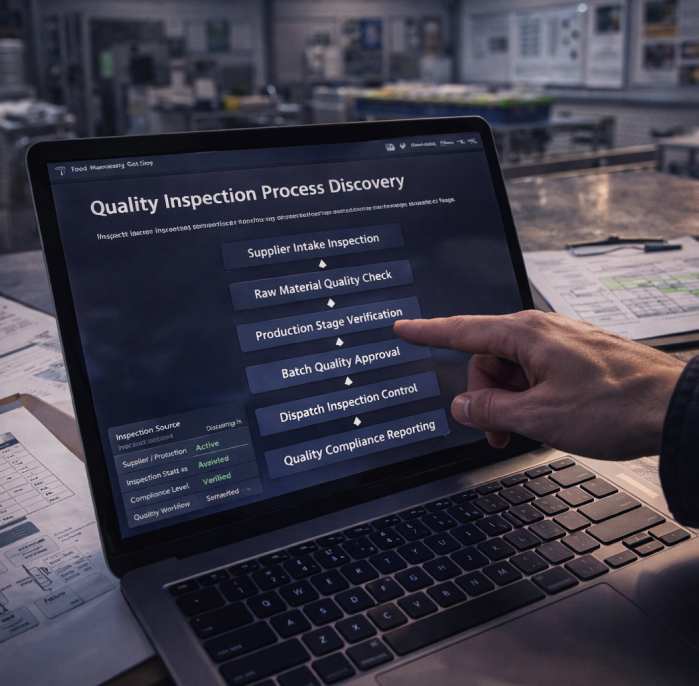
Food manufacturing organizations faced recurring challenges in managing supplier inspections, production checks, and dispatch verification using manual and disconnected methods. As inspection volumes increased, the lack of a centralized digital inspection system affected quality consistency, compliance tracking, operational visibility, and decision-making. This highlighted the need for an AI-driven inspection platform purpose-built for food industry quality control.
Scattered Inspection Records: Inspection data, images, and reports were maintained across paper forms, emails, and spreadsheets without a single source of truth. ➤ Manual Inspection Execution: Inspectors relied on outdated checklists and specifications, increasing the risk of missed checks and non-compliance. ➤ Lack of Real-Time Visibility: Quality and procurement teams could not track inspection status or batch approvals in real time. ➤ Delayed Issue Detection: Defects and deviations were often identified only after production or dispatch. ➤ Limited Supplier Accountability: Supplier performance and compliance trends were difficult to track consistently. ➤ Minimal Quality Insights: Management lacked structured dashboards to analyze inspection results and recurring issues.
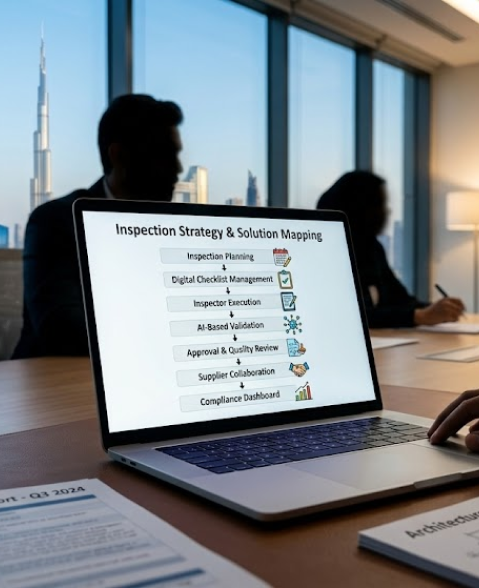
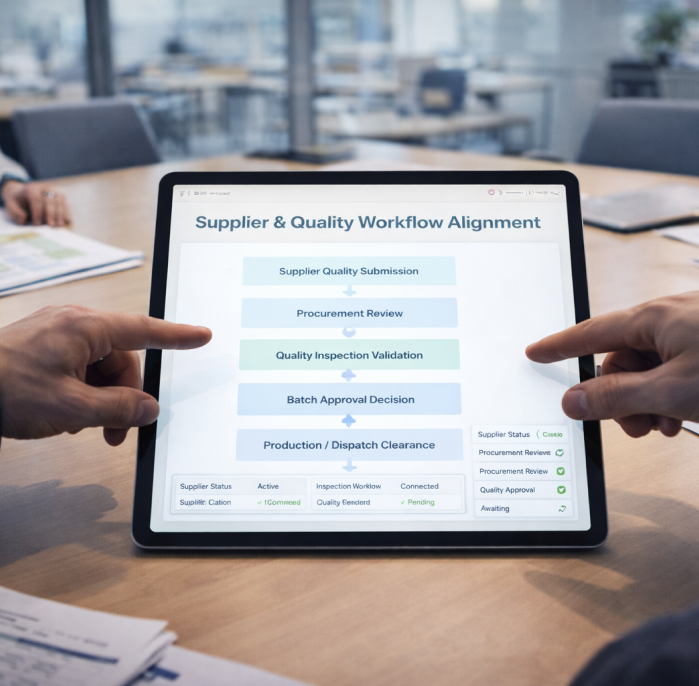
After identifying inspection and compliance gaps, the focus shifted to defining a clear execution strategy that aligned inspection planning, checklist management, approvals, and supplier collaboration into one intelligent quality control platform.
Inspection Requirement Prioritization: Inspection types, product categories, and quality checkpoints were classified based on business risk and compliance needs. ➤ End to End Workflow Mapping: Inspection flows from supplier intake to production and dispatch were mapped clearly. ➤ Role-Based Responsibility Design: Distinct roles were defined for inspectors, approvers, procurement teams, and suppliers. ➤ Data Flow Structuring: Inspection results, images, approvals, and reports were structured for traceability and audit readiness. ➤ Dependency Alignment: Supplier performance, batch approvals, and dispatch decisions were linked to avoid delays. ➤ Scalability Planning: System design accounted for increased suppliers, products, and inspection frequency.
- Inspection and compliance requirements were translated into structured platform modules using modern Web and Mobile App Development practices.
- Inspection workflows were standardized across teams and operational processes.
- Inspection workflows were standardized across locations and teams.
- Stakeholders aligned on quality responsibilities and approval authority
- Rework was minimized through early validation of inspection logic.
- A scalable roadmap for AI-powered quality management was established.
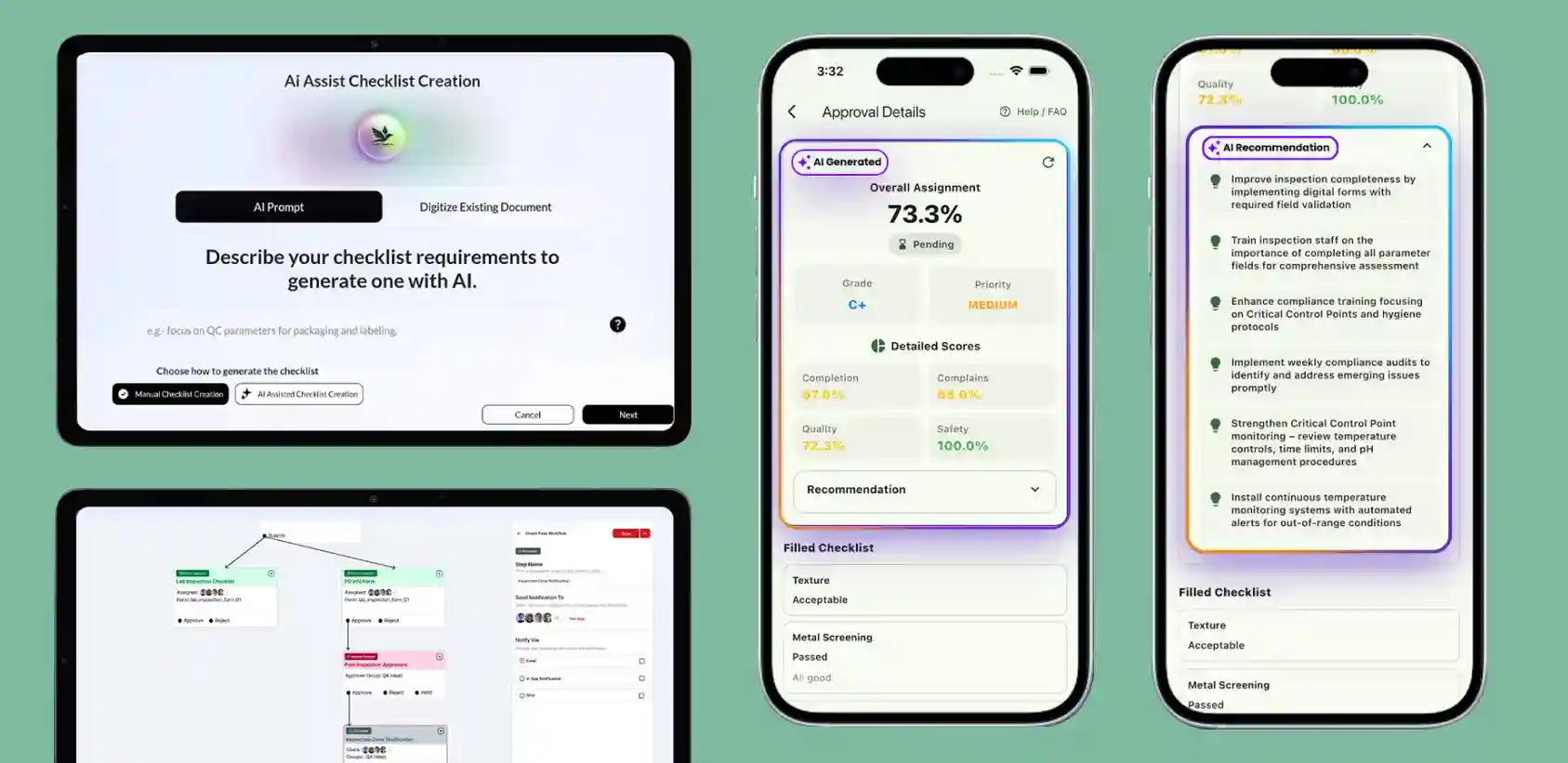
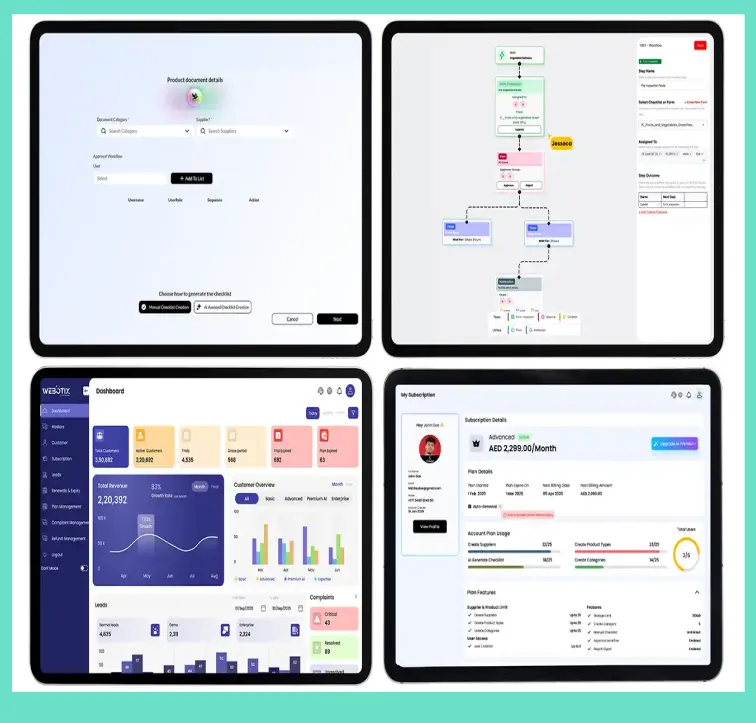
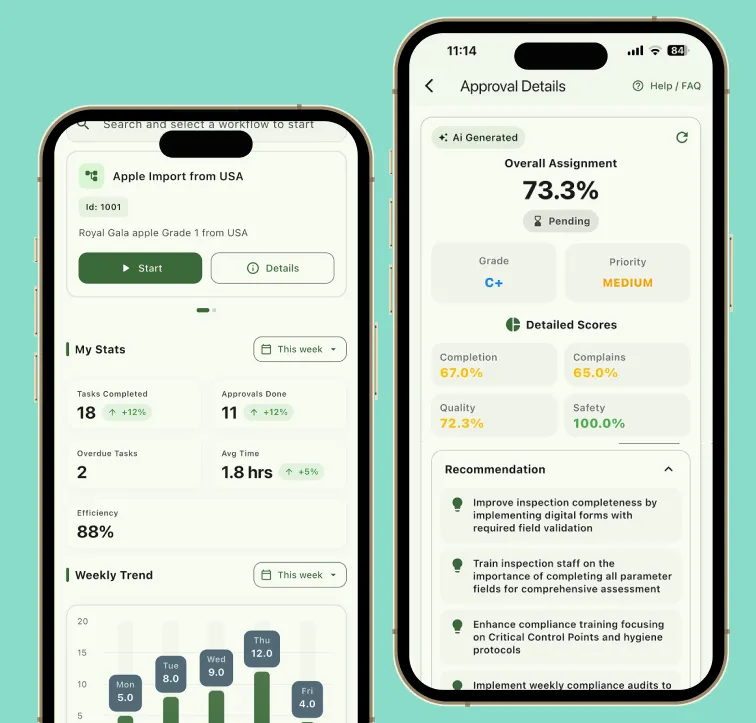
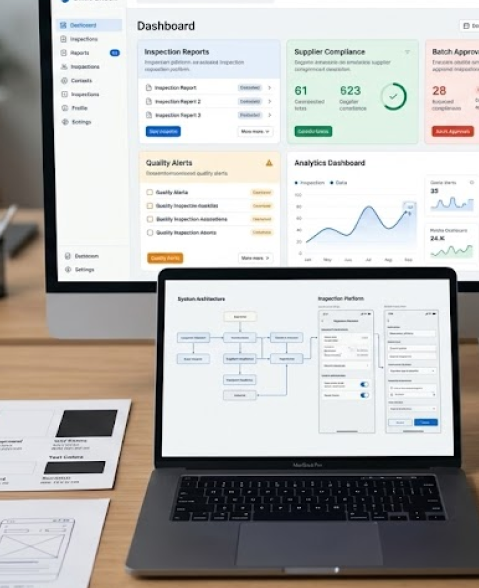
With strategy finalized, Swift Check’s architecture was designed to support mobile inspections, AI checklist generation, supplier collaboration, and real-time reporting using enterprise-grade web and mobile architecture standards.
Platform Architecture Design: Core modules were designed for inspections, approvals, supplier access, reporting, and analytics. ➤ Modular System Structure: Inspection checklists, supplier portal, approvals, and dashboards were built as independent modules. ➤ Secure Role-Based Access: Controlled access levels were implemented for inspectors, approvers, suppliers, and admins. ➤ Data Model Definition: Structured data models ensured accuracy for inspections, batches, and reports. ➤ Integration Readiness: Architecture prepared for ERP, procurement, and reporting system integrations. ➤ Security & Performance Planning: Design ensured data protection, scalability, and system reliability.
- The inspection platform was designed using enterprise web and mobile application architecture standards.
- Secure data flow and controlled access were implemented across inspection roles.
- A stable and scalable AI-powered inspection platform.
- Consistent performance across inspection modules.
- Secure access and controlled data visibility.
- Readiness for future enhancements and integrations.
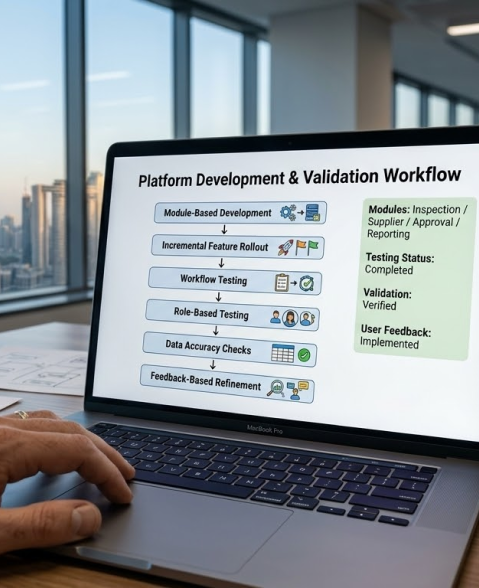
Swift Check AI was developed iteratively to ensure inspection accuracy, workflow reliability, and real-world usability across food manufacturing environments.
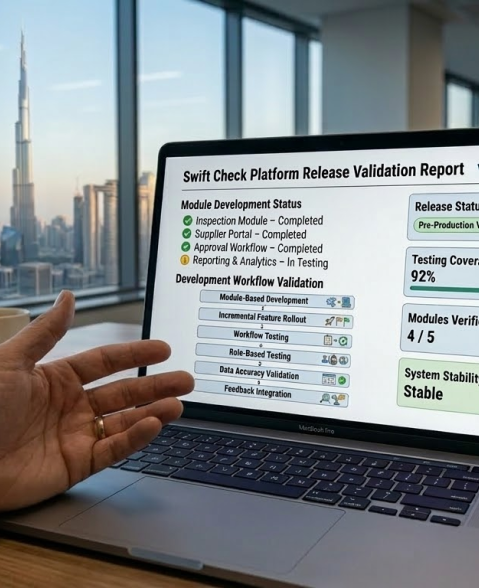
Module-Based Development: Inspection, supplier, approval, and reporting modules were built in phases. ➤ Incremental Feature Rollout: Features were released gradually to maintain system stability. ➤ Workflow Testing: Inspection and approval flows were tested against real production scenarios. ➤ Role-Based Testing: Inspector, approver, supplier, and admin workflows were validated independently. ➤ Data Accuracy Checks: Checklist logic, approval rules, and reporting data were verified. ➤ Feedback-Based Refinement: User feedback was incorporated before full rollout.
- Swift Check AI modules were developed and validated using professional Web and Mobile App Development services.
- Continuous validation ensured alignment with real-world inspection workflows.
- Reduced operational risk during deployment.
- High system reliability through continuous validation.
- Faster adoption due to workflow-aligned UI and mobile experience.
- A production-ready AI inspection platform.