Our Structured Approach to
Academic Web Application Development
Webotix follows a step-by-step development approach that transforms academic and training
requirements into reliable web applications. Each phase focuses on clarity, scalability, and
real-world workflows to ensure consistent results and long-term efficiency in managing
teachers, trainers, students, and institutional operations.
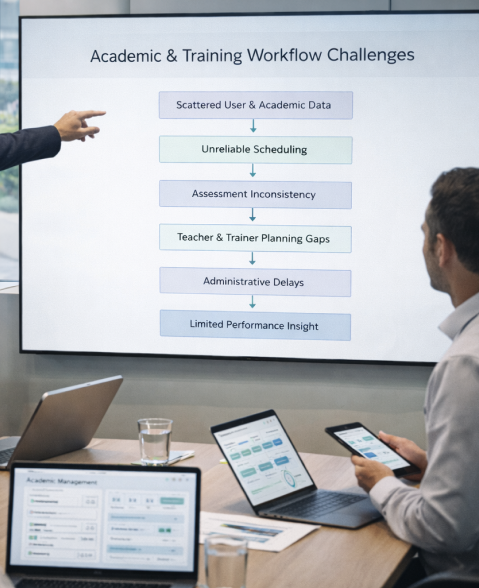
The client, an educational and training institution, faced challenges managing teachers, trainers, students, classrooms, schedules, and assessments through manual processes and disconnected tools. As student intake, training programs, and academic activities increased, the absence of a centralized platform affected operational efficiency, cross-department coordination, and timely decision-making. This highlighted the need for structured Web App Development services combined with scalable Mobile App Development services to support modern academic and training environments.
Scattered User & Academic Data: Teacher, trainer, student, and course information existed in isolated systems. ➤ Unreliable Scheduling: Class and training schedules changed frequently due to conflicts. ➤ Assessment Inconsistency: Evaluation standards varied across academic and training programs. ➤ Teacher & Trainer Planning Gaps: Workloads and session allocations lacked clarity and balance. ➤ Administrative Delays: Routine approvals slowed academic and training workflows. ➤ Limited Performance Insight: Learning and training outcomes were not clearly visible.
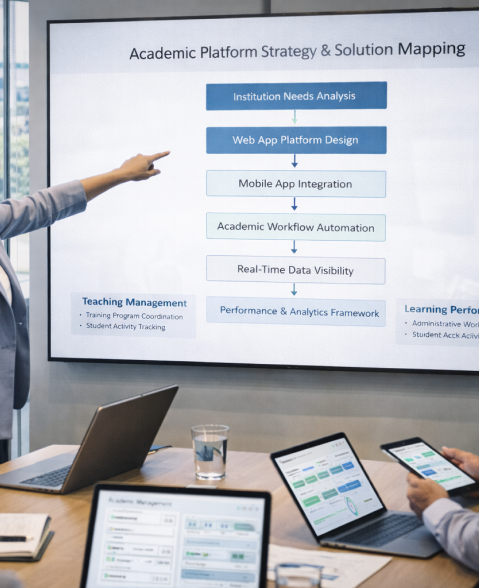
After identifying academic and operational challenges, the focus shifted to defining a clear strategy using Web App Development services and Mobile App Development services to address gaps across teaching, training, administration, and performance monitoring. The objective was to map institutional needs into a structured digital framework through custom web application development that ensures consistency, real-time visibility, and scalable performance.
Requirement Prioritization: Academic, training, and administrative needs were categorized by urgency and impact. ➤ Workflow Definition: Core processes such as scheduling, evaluations, and approvals were mapped end to end. ➤ Role-Based Structuring: Responsibilities were clearly defined for administrators, teachers, trainers, and students. ➤ Data Flow Planning: Academic and training data movement was structured for accuracy and traceability. ➤ Dependency Mapping: Interconnected functions were aligned to avoid workflow conflicts. ➤ Scalability Consideration: Planning accounted for future growth in users, programs, and data volume.
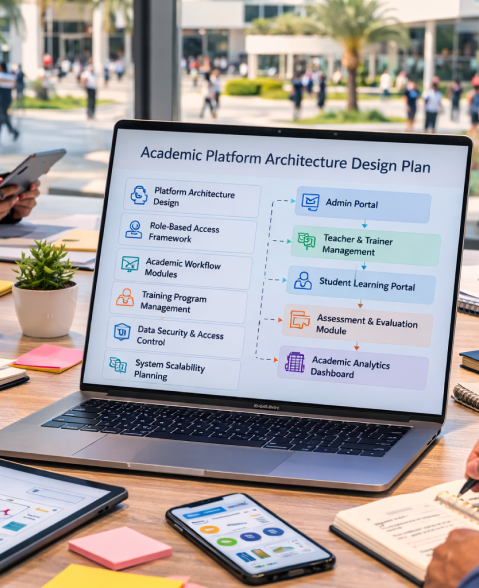
With strategy finalized, system architecture was designed to securely and efficiently support academic and training operations. The goal was to build a flexible foundation connecting modules with role-based access, leveraging Web App Development services and Mobile App Development Company in UAE standards.
System Architecture Design: Platform structure designed to support academic, training, administrative, and reporting modules. ➤ Module Separation: Scheduling, evaluations, user management, and reporting were organized into independent components. ➤ Role-Based Access Planning: Access levels defined for administrators, teachers, trainers, and students. ➤ Data Structure Design: Data models ensured accuracy, consistency, and easy retrieval. ➤ Integration Planning: Touchpoints planned to support future integrations without disruption. ➤ Scalability & Security Planning: Architecture accounted for user growth and institutional data protection.
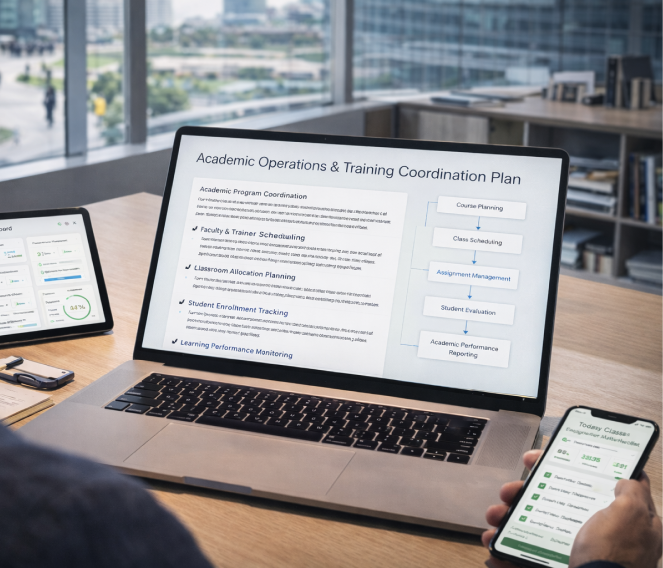
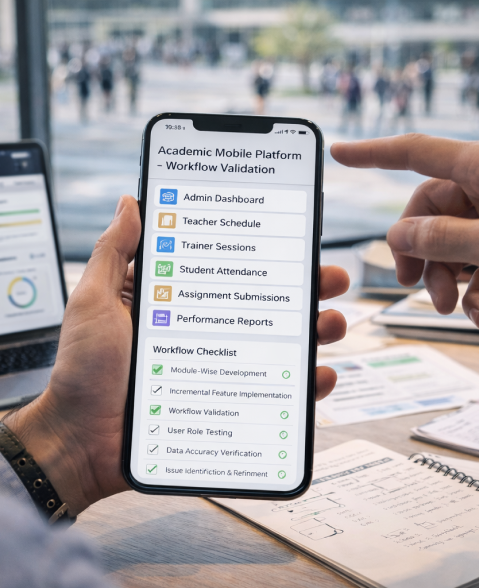
With design finalized, development moved forward using Web App Development services and Custom Mobile App Development services in an iterative and controlled manner. This phase ensured each module supported real-world workflows for administrators, teachers, trainers, and students, following secure and scalable development practices.
Module-Wise Development: Features developed in phases based on priority and dependencies. ➤ Incremental Feature Implementation: Components introduced step by step to maintain stability. ➤ Workflow Validation: Academic and training processes tested against real scenarios. ➤ User Role Testing: Admin, teacher, trainer, and student workflows validated independently. ➤ Data Accuracy Verification: Data handling tested for consistency and reliability. ➤ Issue Identification & Refinement: Feedback used to refine features before rollout.